
by Observatory on Finance and Climate | April 16, 2026 |Bulletin,Debt and Environment,News
On April 15, 2026, during the Spring Meetings of the International Monetary Fund (IMF) and the World Bank in Washington, D.C., developing countries took a historic step by launching theBorrowers’ Platform. Driven by finance ministers and central bank governors from around 30 countries of the Global South — including India, South Africa, the Maldives, Egypt, Pakistan, Colombia, Honduras, Nepal, and Zambia — the initiative marks the first formal and permanent space devoted exclusively to sovereign borrowers.
The Platform stems from the mandate of the Sevilla Commitment, adopted at the Fourth International Conference on Financing for Development (FfD4) in July 2025, and is supported by the United Nations Conference on Trade and Development (UNCTAD) as its technical secretariat. United Nations Secretary-General António Guterres described it as “a breakthrough in global finance,” emphasizing that it brings borrowing countries together so they can learn from one another and speak with a collective voice.
What is the Platform, and what is it for?
Until now, the international financial architecture has been asymmetric: creditors have long had established mechanisms such as the Paris Club and the G20 Common Framework, while debtors lacked an equivalent forum through which to coordinate. The Borrowers’ Platform fills that gap.
Its concrete functions include:
- exchanging successful experiences and emerging risks in debt management;
- providing timely technical support to improve debt transparency and sustainability; and
- building common positions for engagement with multilateral forums such as the IMF, the World Bank, and future United Nations conferences.
With developing countries’ external debt reaching $11.7 trillion in 2024, and interest payments absorbing nearly 10% of public revenues — and up to 25% in the least developed countries — 54 nations, home to 3.4 billion people, now devote more resources to debt service than to health or education. This dynamic not only slows growth; it also erodes countries’ capacity to respond to climate shocks.
Implications for the international financial architecture
The creation of the Platform challenges the structural balance of global financial governance. For decades, the rules of the game have been defined predominantly by creditors, with the IMF and the World Bank acting as arbiters that, in practice, prioritize the stability of Northern financial markets.
The Platform introduces an organized counterpart of borrowers that can push for greater transparency in debt sustainability analyses (DSAs), less procyclical conditionality, and more inclusive and predictable restructuring frameworks.
In the medium term, it could catalyze deeper reforms in the IMF and the World Bank, including greater representation of the Global South in their decision-making bodies and the systematic inclusion of disaster pause clauses for climate-related shocks in new lending.
Organizations such as LATINDADD, which were active in the launch, underline that the initiative’s success will depend on its capacity to help build a “fair, democratic and inclusive debt architecture” capable of counterbalancing the current dominance of private and multilateral creditors.
Implications for climate change: from fiscal constraint to transformative action
High debt-service burdens crowd out public investment in adaptation and mitigation. In the context of an accelerating climate crisis — marked by droughts, hurricanes, and biodiversity loss that hit the Global South with particular force — the most vulnerable countries are being pushed to choose between paying creditors and protecting their populations.
The Platform opens three promising avenues for climate action:
- Fiscal space freed up: better coordination among borrowers can facilitate more ambitious and timely restructurings, releasing resources now absorbed by interest payments so they can be used to finance Nationally Determined Contributions (NDCs) and adaptation plans.
- Momentum for reforming debt instruments: a collective voice can strengthen demands for “loss and damage” clauses in debt contracts and may also help place limits on contractual provisions that are harmful to national sovereignty and the environment.
- Influence over the global agenda: the Platform enables more strategic participation in the COPs, in the negotiations on the New Collective Quantified Goal on Climate Finance (NCQG), and in reviews of the IMF’s debt sustainability framework. By aligning debt management with the goals of the Paris Agreement, it can help break the vicious circle between climate vulnerability and over-indebtedness.
Ultimately, this is not only about “relieving” debt, but about redirecting financial flows toward a just, low-carbon transition.
As the Observatorio de Finanzas y Clima argues, external debt remains one of the main obstacles to Amazon conservation and climate mitigation in Latin America; a coordinated borrowers’ platform can make a significant contribution to changing the rules of the game that have effectively normalized the repayment of external debt through the exploitation of nature.
A first step that requires follow-up and support
The Borrowers’ Platform is a necessary institutional milestone. Its success will depend on sustained participation by countries of the Global South, continued technical support from UNCTAD, and the willingness of creditors and multilateral institutions to accept a fairer set of rules.
The next major test will be the IMF and World Bank Annual Meetings in October 2026. There, the Platform will need to present its work programme and begin turning coordination into concrete results: greater transparency, better financing terms, and, above all, a stronger capacity for developing countries to invest in a viable climate future.
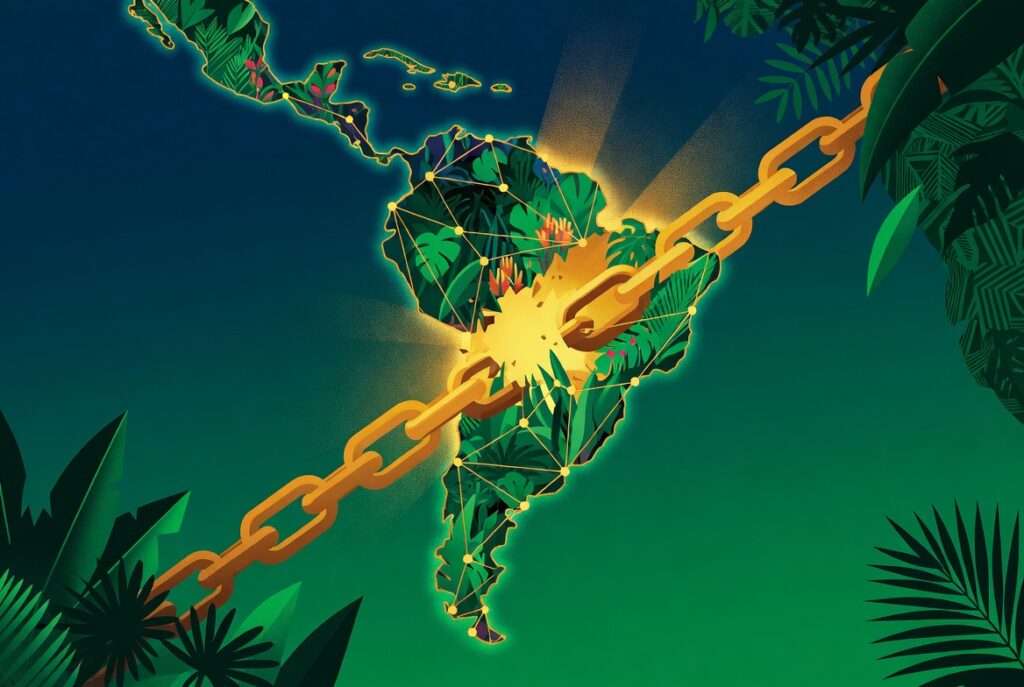
Debt cannot continue to be the chain that blocks climate action. With the Borrowers’ Platform, developing countries have taken the first step. It is now up to the international community — including Northern creditors — to decide whether they are willing to open the door.